
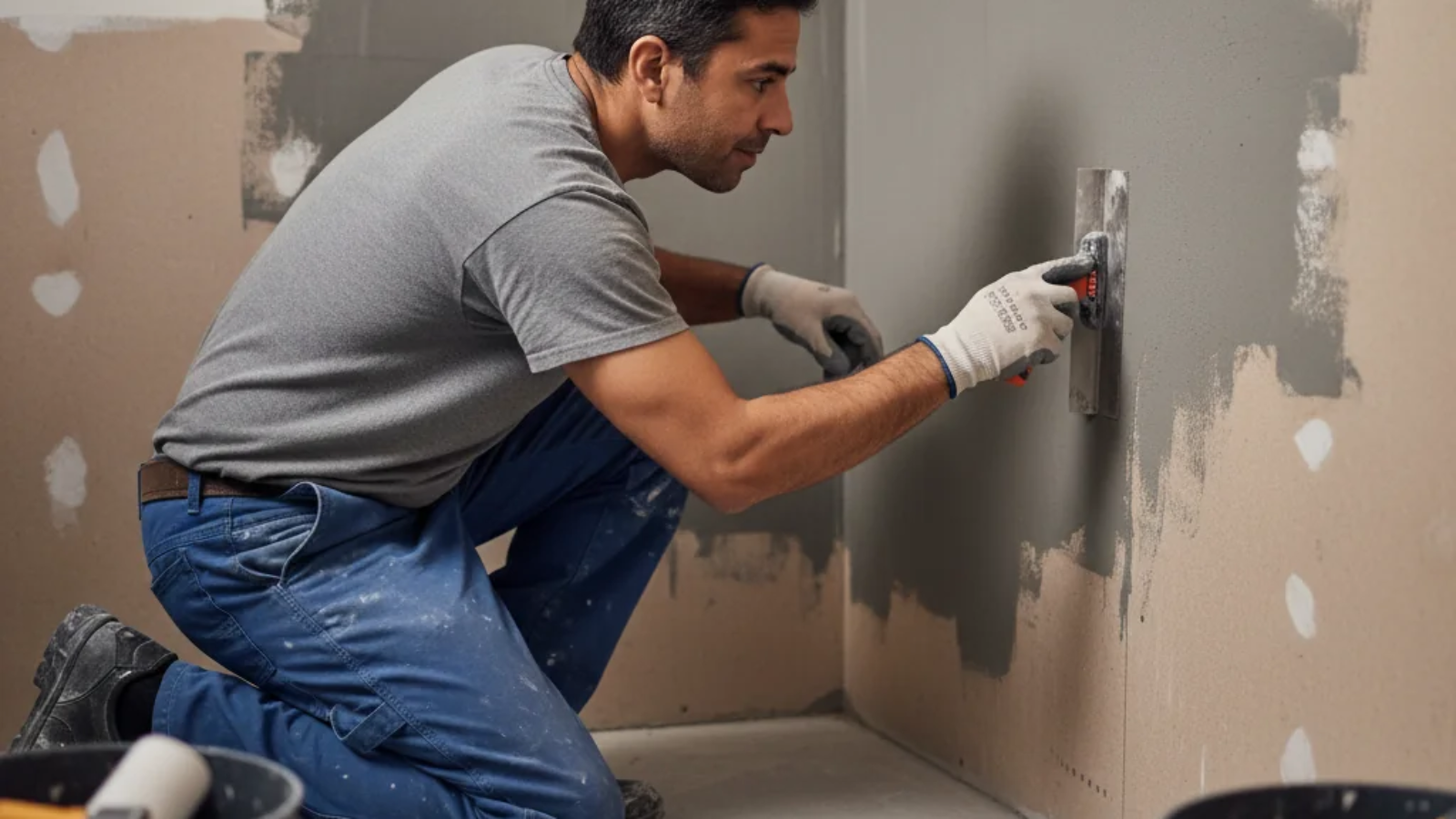
If you are planning a new tile shower, the most important work happens before a single tile goes up. Shower waterproofing is the hidden layer that keeps water inside the shower and out of your walls, your subfloor, and the rooms below. Tile and grout look solid, but they are not a water barrier on their own. Water passes through grout joints every day, and without proper shower waterproofing it soaks into the structure behind the tile.
This guide explains how shower waterproofing works, the systems professionals use, the mistakes that cause showers to fail, and how to decide what your bathroom actually needs. The right approach depends on your space, your subfloor, and how much water the area sees, so treat this as a map rather than a one-size-fits-all answer.
What is shower waterproofing?
Shower waterproofing is the continuous waterproof layer installed behind the tile, across the shower walls, the curb, and the shower floor, that stops water from reaching the substrate. It is built into the assembly, so you never see it once the tile is set. Done correctly, it directs every drop toward the drain instead of into your home.
A complete shower waterproofing assembly usually includes several connected parts:
- A sloped shower pan or pre-formed base that moves water to the drain
- A waterproof membrane on the floor and up the walls
- Sealed inside and outside corners, where most failures begin
- A waterproof collar and bond at the drain
- Sealed penetrations for the valve, niche, and bench
- A vapor management plan appropriate to the wall assembly
Why tile and grout are not enough
Grout is cement based and porous, so it absorbs and passes water. Even a sealed grout joint slows water rather than stopping it. That is why a dedicated waterproof membrane is the part that protects the structure. The industry methods for these assemblies are published by the Tile Council of North America (TCNA), whose handbook is the reference professional installers follow.
Do you really need shower waterproofing?
In a real, daily-use shower, yes. A shower is a continuous wet area, and skipping the membrane is the single most common reason showers fail and need to be torn out a few years later. Whether you need a heavier assembly depends on the situation, and that is where it depends on your space, your subfloor, and your water exposure.
Consider how the answer shifts with the project:
- A full walk-in shower needs floor-to-ceiling protection on the wet walls and a fully waterproof floor
- A tub surround sees splashing rather than standing water, so the wet zone is smaller but still real
- A steam shower needs a vapor barrier strategy, not just a surface membrane
- A curbless or barrier-free shower changes how the floor and the bathroom transition are waterproofed
- An upstairs bathroom raises the stakes, because a hidden leak can damage the ceiling and framing below
If you are unsure which of these describes your bathroom, that is a normal question, and it is exactly what a site visit is meant to answer.
Shower waterproofing systems: your main options
There is no single best product. The right shower waterproofing system depends on the shower layout, the drain, the substrate, and the budget. Here are the approaches a professional will weigh, all recognized by current tile standards.
Sheet membranes
A sheet membrane is a manufactured waterproof fabric bonded to the walls and floor with thinset. It has a consistent, factory-controlled thickness, which many installers value for predictability. Sheet systems pair well with bonded shower pans and pre-formed components, and they are a strong choice for curbless showers and linear drains.
Liquid-applied membranes
A liquid membrane is rolled or troweled on in coats, then cures into a seamless waterproof skin. It shines on complex shapes, benches, niches, and tight corners, because there are no seams to detail. Its reliability depends heavily on applying the correct film thickness, so it rewards an experienced hand and careful inspection between coats.
Foam board and pre-formed systems
Waterproof foam backer boards and pre-sloped trays create a coordinated, fully waterproof shell when their seams and fasteners are sealed with the matching band and sealant. These systems speed up a build and reduce variables, which is why they are popular for custom showers and curbless designs.
Traditional mortar bed with a pan liner
The traditional method uses a sloped mortar bed over a sheet pan liner that drains through a weep-hole clamping drain. It is a proven assembly when built with a correct pre-slope under the liner. Its weak point is a missing pre-slope, which traps water against the liner instead of moving it to the drain.
The biggest shower waterproofing mistakes
Most shower failures are not caused by the tile. They trace back to the waterproofing layer underneath. These are the errors that send homeowners back to a full tear-out:
- Relying on tile and grout alone, with no real membrane behind them
- Skipping the pre-slope under a traditional pan liner
- Leaving corners, the curb, and the drain bond unsealed, which is where leaks start
- Applying a liquid membrane too thin to perform
- Mixing parts from different systems that were never designed to bond together
- Penetrating the finished membrane for a niche or bench without re-sealing it
- Tiling before a flood test confirms the assembly holds water
The flood test that prevents most failures
A flood test is simple and revealing. The installer plugs the drain, fills the waterproofed pan with water, marks the level, and waits about 24 hours. If the level holds, the assembly is sound. If it drops, the problem is found now, before tile and a finished bathroom hide it. Insisting on a flood test is one of the easiest ways to protect a shower waterproofing project.
Water damage you cannot see
When a shower leaks slowly, the first signs are hidden: damp framing, a musty smell, or staining on a ceiling below. Moisture trapped behind tile can also support mold growth, which is why moisture control matters for health as well as structure. The U.S. EPA’s guidance on mold and moisture is clear that the durable fix is keeping water out in the first place, not cleaning up after it.
When to hire a professional for shower waterproofing
Some bathroom tasks are reasonable for a confident homeowner. A full shower waterproofing assembly is usually not one of them, because the consequences of a small error are hidden and expensive. It is worth bringing in a professional when:
- The shower is on an upper floor, where a leak reaches the rooms below
- You want a curbless or barrier-free design, which changes the floor and drain detailing
- You are building a steam shower that needs vapor management
- The subfloor flexes, is out of level, or shows past water damage
- The layout includes a bench, a niche, or a linear drain that must be integrated into the membrane
Keep code in mind too. Structural, plumbing, and drain changes can require permits, and Massachusetts work follows the state building code, known as 780 CMR. A qualified installer will confirm what your specific project needs. You can also look for installers who follow the standards published by the National Tile Contractors Association (NTCA). For broader planning, our bathroom remodeling guides walk through budgeting and layout, and our surface preparation articles cover the substrate work that waterproofing depends on.
Get your shower waterproofing done right with Le Rocha Tile
Le Rocha Tile is a Massachusetts bathroom and tile specialist, and shower waterproofing is at the center of what we do. We do not treat the membrane as an afterthought, because we know it is the part that protects your home. Here is why homeowners bring us in:
- We waterproof to recognized tile standards, then flood test before any tile goes on
- We match the system to your shower, your drain, and your subfloor, not to a single product we always push
- We explain the plan in plain language, so you understand what is behind your tile
Every bathroom is different, so the right system depends on your space, your subfloor, and your water exposure. The simplest next step is to have it assessed in person. Text us and we will set up a visit. Get a Free Estimate, or reach our team through the contact section on our site. You can also browse more of our custom shower guides on the Le Rocha Tile blog.
Shower waterproofing FAQ
How much does shower waterproofing cost?
It depends on the size of the shower, the system chosen, and the condition of the subfloor, so a fixed price is not realistic before a site visit. Curbless designs, benches, niches, and linear drains add detailing time. The honest way to get a real number is a free estimate, where the scope and site conditions can be measured rather than guessed.
Is shower waterproofing required by code?
Showers must be built as durable wet areas, and tile assemblies are expected to be waterproofed to recognized standards. Structural, plumbing, and drain changes can also trigger permit requirements, and Massachusetts projects follow the state building code, 780 CMR. A qualified installer confirms what applies to your specific bathroom before the work begins.
Can I do shower waterproofing myself?
A careful homeowner can handle some bathroom tasks, but a full membrane assembly is risky to learn on, because errors stay hidden until damage appears. Corners, the drain bond, and the pre-slope are unforgiving. If you do try it, follow one manufacturer’s system completely and run a flood test before tiling. For an upstairs or curbless shower, a professional is the safer call.
Sheet membrane or liquid membrane: which is better?
Neither is automatically better. Sheet membranes give a consistent factory thickness and pair well with bonded pans. Liquid membranes handle complex corners and niches with no seams, but they depend on the right film thickness. The better choice for your shower waterproofing depends on the layout, the drain, and who is installing it. A good installer will recommend based on the actual shower.
How long does a waterproofed shower last?
A correctly built and flood-tested shower can perform for many years, but no honest installer will promise an exact lifespan, because use, movement, and care all play a role. What protects longevity is a sound membrane, sealed corners, quality tile work, and routine attention to grout and sealant. Good waterproofing reduces the risk of hidden leaks; it does not remove the need for normal upkeep.
What are the signs my shower is leaking?
Watch for loose or hollow-sounding tile, grout that keeps cracking, a musty smell, peeling paint outside the shower, or staining on the ceiling below an upstairs bath. These point to water reaching places it should not. If you see them, stop using the shower heavily and have it inspected, because the source is usually a waterproofing failure behind the tile.
Do I need to waterproof shower walls or just the floor?
Both. The floor sees the most water, but the wet walls in a walk-in shower need protection from floor to ceiling, and the corners that join them are where leaks commonly begin. A tub surround has a smaller wet zone, yet still needs a proper membrane in the splash area. Treating shower waterproofing as a connected shell, not separate pieces, is what keeps it sound.
Shower waterproofing is the part of a bathroom you will never see and the part you cannot afford to skip. Get the membrane right and the rest of the shower has a sound foundation. When you are ready, the best move is a free estimate, so the plan fits your exact space rather than a generic checklist. Text Le Rocha Tile at +1 978-421-6468 and we will take it from there.
Add a Comment